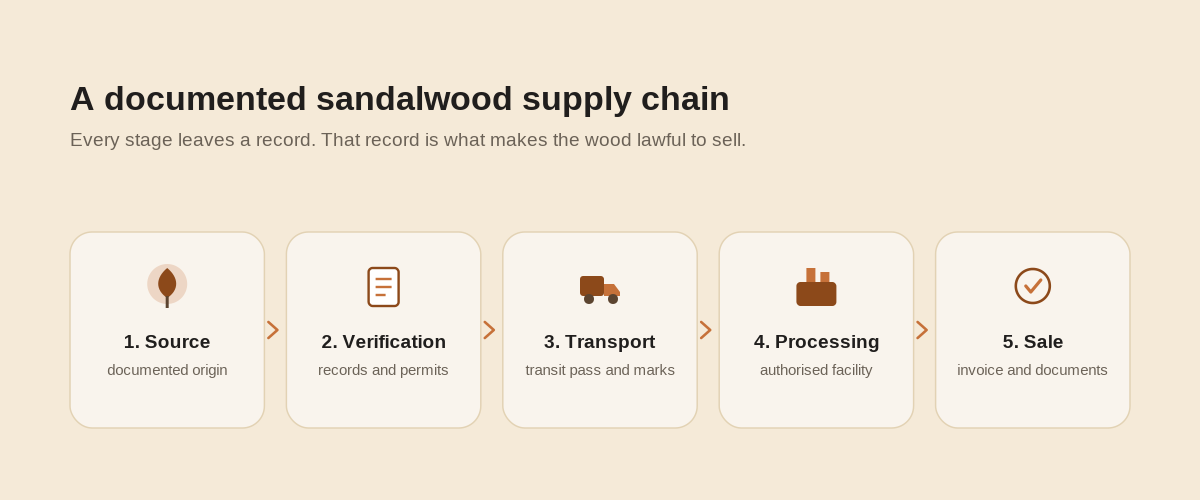
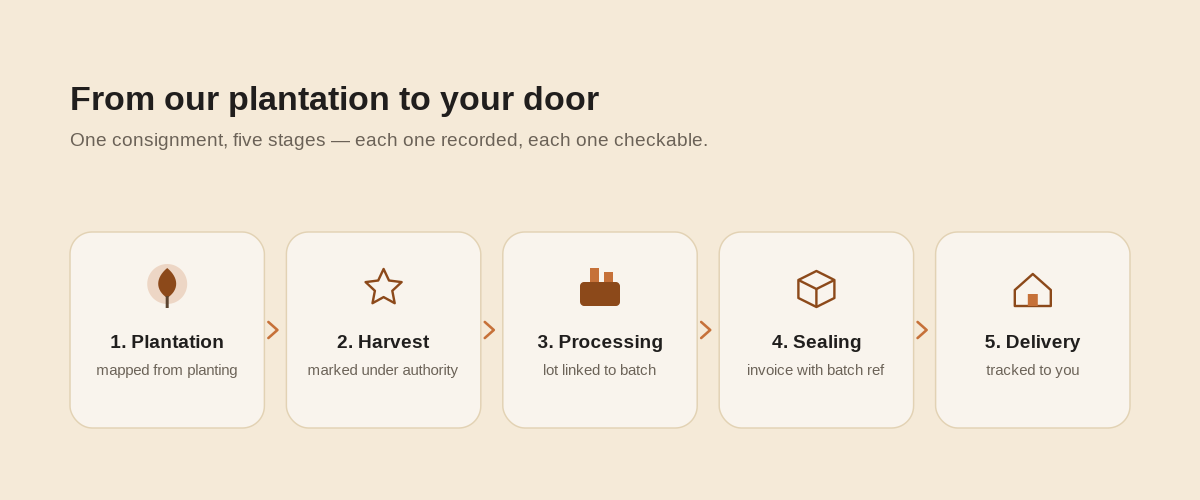
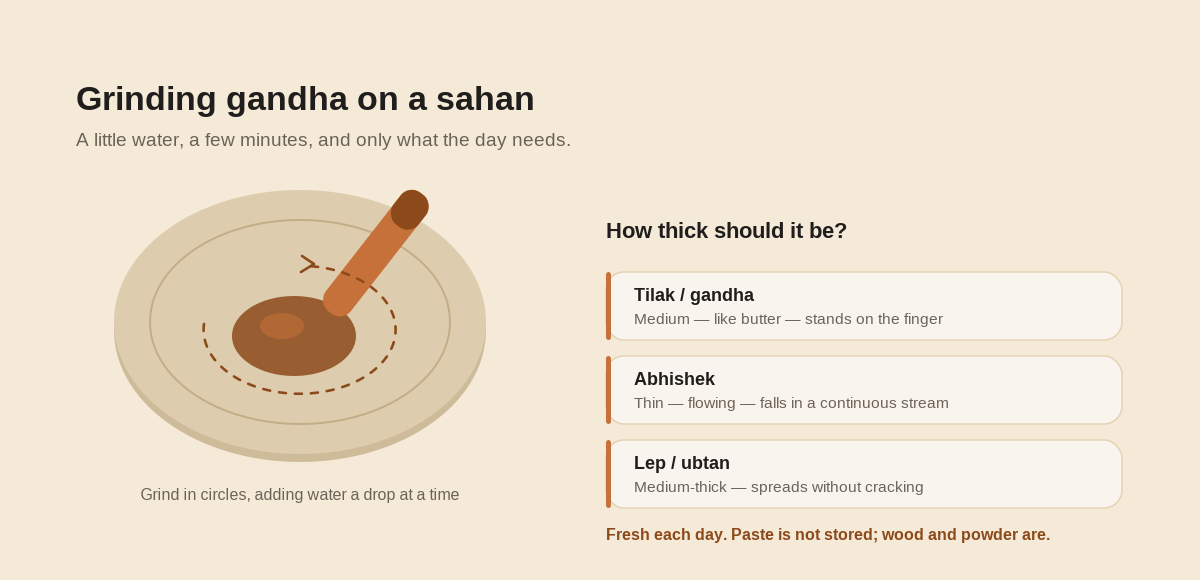
Grades, oil content, species and storage — what to know before buying.
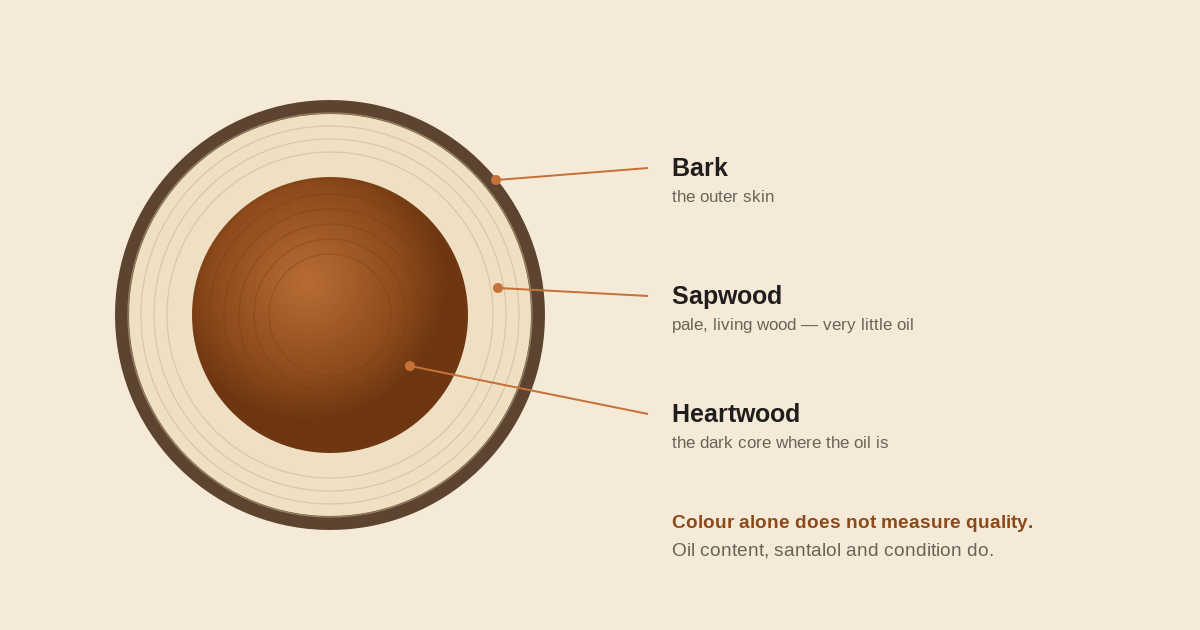
Heartwood vs Sapwood: Sandalwood Grades and Sizes Explained
When people hear the words Indian sandalwood, they often imagine a dark, highly fragrant piece of wood.
12 min readRead more →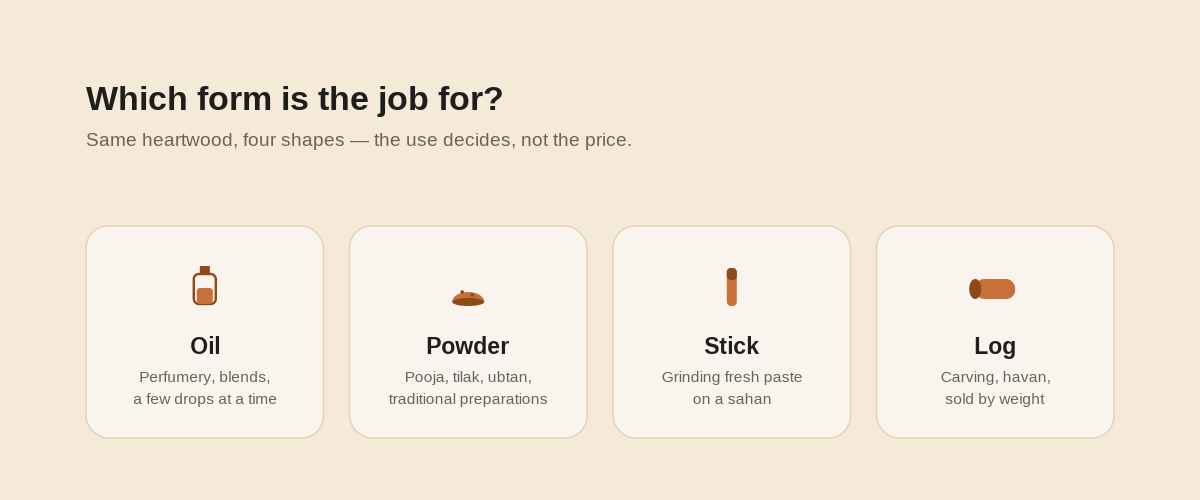
Powder, Stick, Log or Oil: Which Sandalwood Product Should You Buy?
For daily tilak choose a stick (traditional) or powder (convenient); for abhishek and idol bathing choose powder; for havan and temple rituals choose heartwood log; for fragrance and perfumery choose oil. Below is the full decision guide with quantities, and a per-use cost comparison that usually surprises people — the 'expensive' option is often the cheapest per use.
4 min readRead more →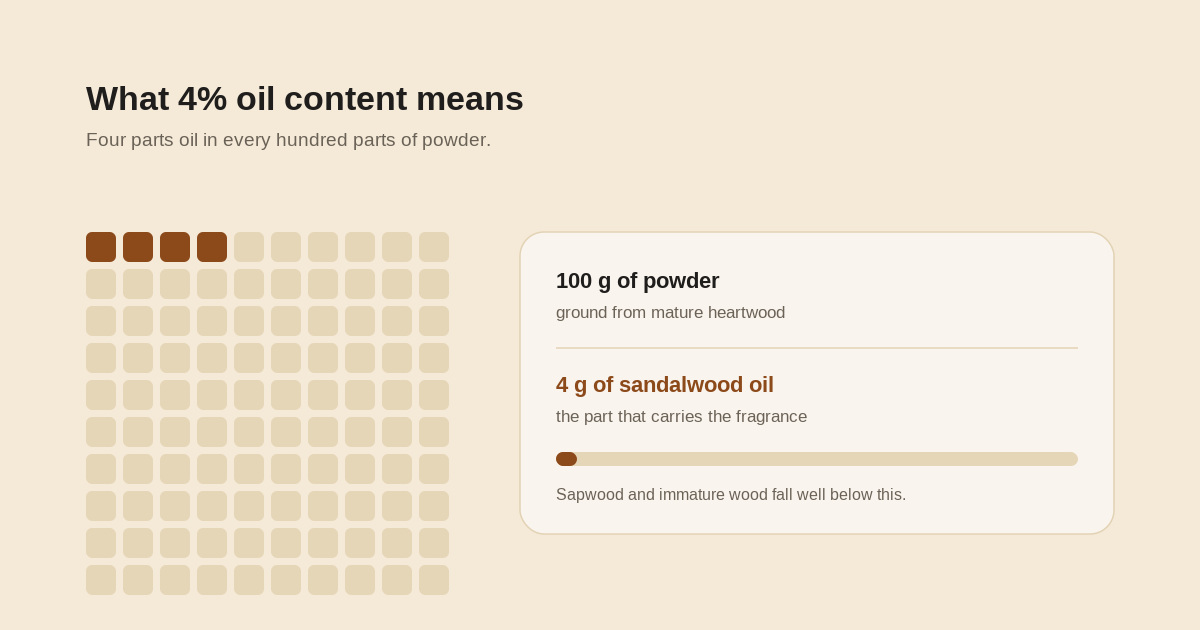
What Does '4% Oil Content' Mean in Sandalwood Powder?
'4% oil content' means that 4% of the powder's weight is the natural aromatic oil of sandalwood heartwood — the substance that carries the fragrance and gives paste its quality. It is measured from the heartwood lots the powder is ground from. It is the single most useful number a powder seller can give you, and the one adulterated products cannot honestly state.
4 min readRead more →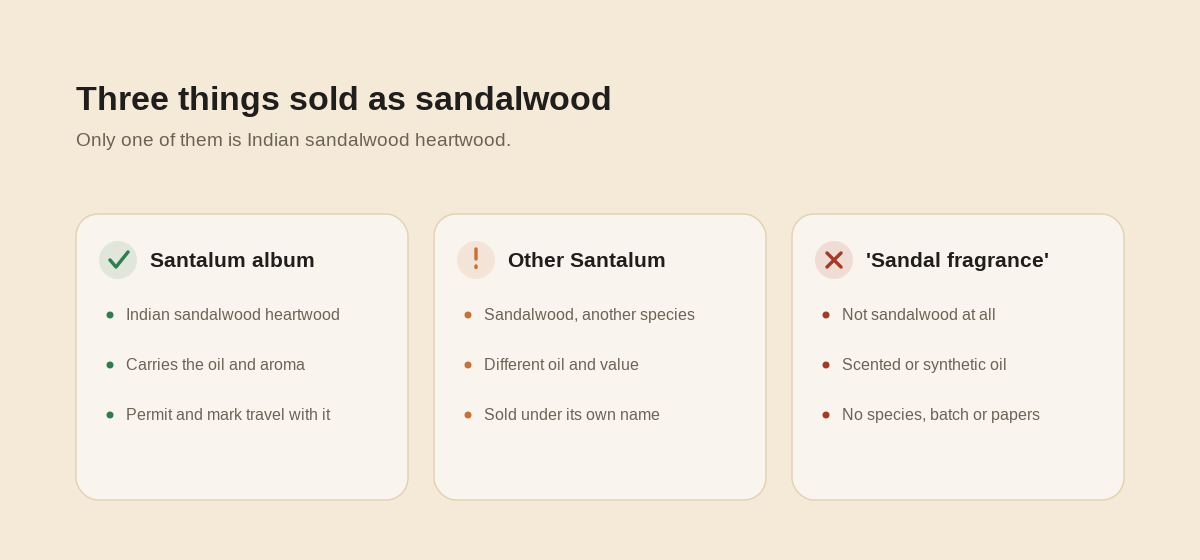
Santalum Album vs Other Sandalwoods vs 'Sandal Fragrance' Products
The word 'sandalwood' is applied to at least four different things: Indian sandalwood (Santalum album), the species of tradition and highest fragrance; other Santalum species such as Australian sandalwood; red sanders (Pterocarpus santalinus), which is not a true sandalwood at all; and synthetic 'sandal' fragrance in incense, soaps and oils that contain no sandalwood. For ritual, traditional and perfumery use, only the first is chandan in the proper sense.
4 min readRead more →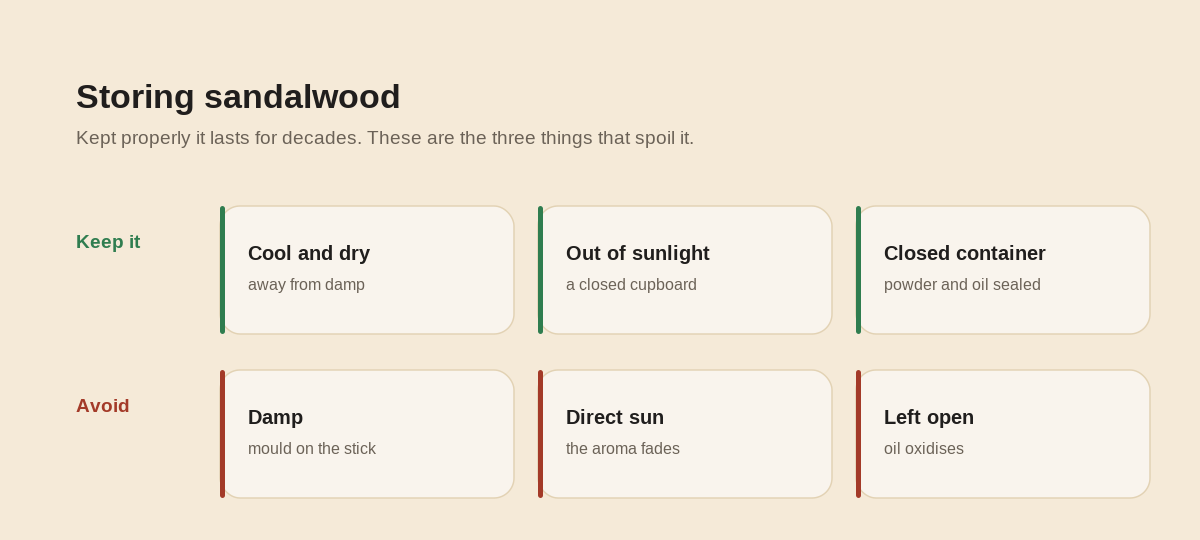
How to Store Sandalwood Products So They Last for Decades
Sandalwood stores well because its fragrance lives inside the wood, not on it. Keep every product airtight, dry, and out of direct sunlight, and heartwood holds its aroma for decades, powder for years, and oil for years if the cap stays tight. The few ways people ruin sandalwood — damp storage, sunlight, and leaving powder open — are all avoidable.
3 min readRead more →